• Skip to content
  • Skip to navigation
Global site
Grant Thornton Ireland - Home
  • View all industries

    • Asset Management
    • Aviation
    • Banking
    • E-money and Digital Payments
    • Government and Public Sector
    • Healthcare
    • Insurance
    • Life Sciences
    • Technology
    • Advisory

      • All Advisory Services
      • Aviation Advisory
      • Business Risk Services
      • Consulting
      • Deal Advisory
      • Financial Accounting and Advisory
      • Forensic Accounting
      • Restructuring
      • Risk Advisory
      • Sustainability Advisory
    • Audit

      • All Audit Services
      • Corporate Accounting and Outsourcing
      • Financial Services Audit
      • Global Statutory Audit
      • Pension Audit
    • Tax

      • All Tax Services
      • Corporate Tax
      • Financial Services Tax
      • Indirect Tax Advisory
      • International Tax
      • Private Client
      • Tax Governance
  • Insights
  • Meet our people
  • Careers

    • Experienced Hires
    • Graduate Programme
    • Undergrad Programme

    Why Grant Thornton

    • Working at Grant Thornton
    • Our Benefits
  • Connect

    • About us
    • Alumni network
    • Contact us
    • Credentials
    • Events
    • News
    • Subscriptions

Search dialog

Global site
Contact us
  1. Home
  2. Insights
  3. Factsheets

Factsheets

Digital transformation: The first step to AI-optimised fund administration Article

Streamline fund administration with digital transformation and AI, improving efficiency, data management and investor services.

Shona O'Hea
Karl Rohloff
| 12 min read | 08 May 2025

Company Vehicle BIK changes from January 2026 Article

New BIK rates from Jan 2026 include EV incentives and OMV reductions. Learn how emissions and mileage affect company car tax in Ireland.

Jillian O'Sullivan
| 3 min read | 03 Nov 2025
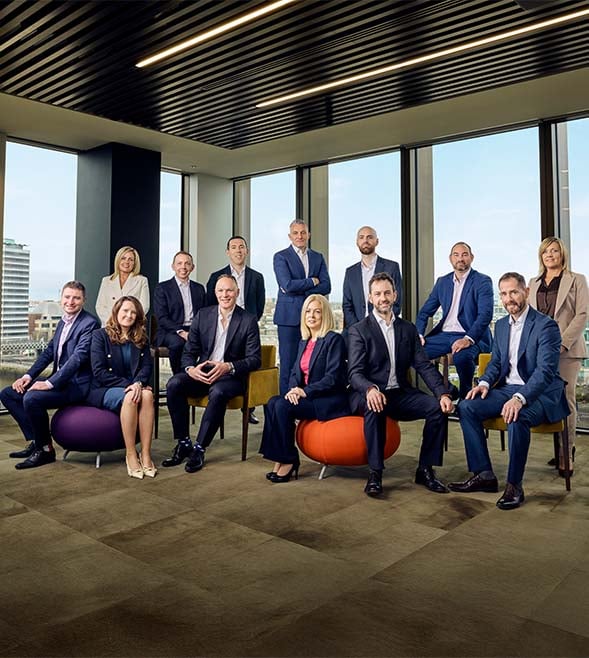
Grant Thornton Ireland announces appointment of 12 new partners Grant Thornton Ireland announces appointment of 12 new partners

Grant Thornton Ireland appoints 12 new partners across audit, tax and advisory.

13 Mar 2026
Company Vehicle BIK changes from January 2026 Article
Jillian O'Sullivan
| 3 min read | 03 Nov 2025
Understanding Irish tax rules on employee benefits Article
Michelle Dunne
Jane Quirke
| 11 min read | 01 Sep 2025
Navigating Ireland's R&D tax credit: A comprehensive guide Article
Peter Vale
| 14 min read | 04 Nov 2024
Banking on AI: Balancing speed, risk, and regulation Article
Dwayne Price
Jonathan Fitzpatrick
Lukas Majer
| 7 min read | 03 Oct 2025
Anti-Hybrid Mismatch Rules: Beware of Mismatch Outcomes Tax

As required by the EU Anti-Tax Avoidance Directive (ATAD), Finance Act 2019 introduced wide ranging anti-hybrid mismatch rules into Irish domestic tax legislation. These provisions apply in respect of all payments made or arising on or after 1 January 2020. These rules present some of the most complex tax provisions introduced in recent times introducing unique definitions, terminology and concepts not previously referenced under any other piece of Irish tax legislation.

20 Apr 2021
DORA (Digital Operational Resilience Act) digital Risk

DORA is a draft regulation published by the European Commission in September 2020 and forms part of the European Commission’s wider Digital Finance Strategy to support the development of digital finance while mitigating associated risks

22 Mar 2021
Proposed New Cybersecurity Directive (NIS 2.0) Business Risk Services

The European Commission has adopted a proposal for a revised Directive on Security of Network and Information Systems (NIS 2 Directive).

18 Mar 2021
Remote Working Abroad – Irish Tax Considerations Tax

During the COVID 19 pandemic, Irish employers may have facilitated some of their employees work remotely in a foreign jurisdiction. Remote working from a foreign tax jurisdiction may create Irish tax issues for both the Irish employer and the employee.

Jillian O'Sullivan
| 16 Mar 2021
Irish Transfer Pricing Guide International Tax

Irish transfer pricing rules apply to arrangements entered into between associated persons (companies) on or after 1 July 2010, involving the supply or acquisition of goods, services, money or intangible assets. Our transfer pricing guide provides an overview of the Irish Transfer Pricing rules.

16 Mar 2021
Share schemes reporting deadline Tax

Employers are obliged to submit a Form RSS1 in any year in which an option is granted, exercised, transferred or released to an employee. The RSS1 for 2020 should be completed and submitted online via Revenue Online Service (ROS) on or before 31 March 2021.

05 Mar 2021
Data protection as a service Cyber Security

Read our latest factsheet about Data protection as a service

03 Mar 2021
Irish Investment Limited Partnership (ILP) Financial Services

The Irish Investment Limited Partnership (ILP) structure is a regulated partnership structure that is authorised as either a Qualifying Investor Alternative Investment Fund (QIAIF) or Retail Investor Alternative Investment Fund (RIAIF) that will appeal to global investments managers and promoters in particular for Private Equity, Private Credit, Real Estate, sustainable finance and infrastructure assets.

02 Mar 2021
Liquidity Requirements: what to expect under the IFR & IFD? Financial Services Advisory

The Investment Firms Regulation EU 2019/2033 (IFR) and Investment Firms Directive EU 2019/2034 (IFD) establishes a tailored prudential framework for investment firms. The new prudential regime applies to investment firms that not systemic by virtue of their size and interconnectedness within the wider financial system, i.e. primarily Class 2 type firms (see the classification criteria in our previous publication). Small and non‐interconnected investment firms may receive regulatory requirement exemption from the competent authorities.

15 Feb 2021
Temporary Wage Subsidy Scheme (TWSS) tax liabilities Tax

Subsidy payments by Revenue to employers under the Temporary Wage Subsidy Scheme (TWSS) and paid to employees are treated as part of the employees’ emoluments i.e. salary and wages, for tax purposes. The subsidy amount paid to employees via payroll was not subject to tax under the PAYE system however, the amount received by the employee is liable to income tax and Universal Social Charge (USC).

28 Jan 2021
Directors' compliance statement: Are you up to date? Article

Understand directors' compliance obligations under the Companies Act 2014 and ensure your policies reflect current tax and legal requirements.

Jillian O'Sullivan
Sasha Kerins
Brian Murphy
| 2 min read | 25 Jan 2021
Brexit agreement - What should businesses do? Brexit Alert

We have outlined below some of the key considerations contained within the Free Trade agreement between the EU and the UK. The agreement allows for tariff free trade between the EU and UK and sets out a new trading relationship between both parties.

06 Jan 2021
Prudential regime: Capital updates Article

The Investment Firms Regulation EU 2019/2033 (IFR) and Investment Firms Directive EU 2019/2034 (IFD) establishes a tailored prudential framework for investment firms. As outlined in our previous publication, the new prudential regime for investment firms applies to class 2 & firms primarily, which are not systemic by virtue of their size and their interconnectedness within the wider financial system.

05 Jan 2021
MOSS & Brexit Tax

The Mini One Stop Shop, better known as MOSS, is a simplification measure to reduce the administrative burden and costs for businesses should they be in involved in supplying telecommunications, broadcasting and electronic (TBE) services to non-taxable persons i.e. typically private consumers.

14 Dec 2020
iXBRL Briefing

Grant Thornton offers a timely, cost effective, managed iXBRL tagging service for company financial statements and tax returns. If the Irish Revenue or HRMC iXBRL tagging requirements apply to your company then our service could be the solution for you.

Sara McAllister
| 24 Nov 2020
ESMA Guidelines on performance fees in UCITS and AIFs Financial Services Audit

Guidelines on performance fees in UCITS and certain types of AIFs were published by ESMA on 5th November 2020 and will become applicable from 5th January 2021.

11 Nov 2020
Load more

About About

  • About us
  • Careers
  • Equity, diversity and inclusion
  • Locations
  • News
  • Sustainability

Connect Connect

  • Alumni
  • Contact us
  • Events
  • Global reach
  • Meet our people
  • Subscriptions

Legal Legal

  • Cookie policy
  • Cookie preferences
  • Disclaimer
  • Modern slavery statement
  • Privacy policy
  • Privacy statement: professional engagements
  • Sitemap
  • Whistleblowing

Industries Industries

  • Asset Management
  • Aviation
  • Banking
  • E-money and Digital Payments
  • Government and Public Sector
  • Healthcare
  • Insurance
  • Life Sciences
  • Technology

Follow usFollow us

© 2026 Grant Thornton Ireland and Grant Thornton Corporate Finance Limited (and their respective subsidiary/affiliate entities). All rights reserved. ‘Grant Thornton’ refers to the brand under which the Grant Thornton member firms provide assurance, tax and advisory services to their clients and/or refers to one or more member firms, as the context requires. Grant Thornton Ireland and Grant Thornton Corporate Finance Limited (and their respective subsidiary/affiliate entities) operate under an alternative practice structure. Grant Thornton Ireland is an independent professional chartered accountancy firm, regulated by Professional Standards Chartered Accountants Ireland (“PSCAI”) and are subject to the Investment Business Regulations of PSCAI when providing investment business advice to clients. Grant Thornton Corporate Finance Limited and its respective subsidiary/affiliate entities provide tax, advisory and business consulting services to their clients. Grant Thornton Ireland and Grant Thornton Corporate Finance Limited (and their respective subsidiary/affiliate entities) are the Irish member firms of Grant Thornton International Ltd (GTIL). GTIL and the member firms are not a worldwide partnership. GTIL and each member firm is a separate legal entity. Services are delivered by the member firms. GTIL does not provide services to clients. GTIL and its member firms are not agents of, and do not obligate, one another and are not liable for one another’s acts or omissions.