A foreign employment tax obligation can arise from as little as an employee spending one day working in a foreign country. Such obligations should be considered from a very early stage given the high personal tax rates that apply across Europe and associated penalties for companies who fail to register for and operate payroll withholding taxes.
SARP was first introduced in 2012 to encourage the relocation/assignment of key employees to Ireland. Where certain conditions are satisfied, 30% of taxable employment income over €75,000 will be disregarded for income tax purposes. Income which is disregarded for income tax purposes is not exempt from the Universal Social Charge (USC) or PRSI.
A company strike off is a process whereby a company is removed from the Register of Companies and ceases to exist. A company which has been struck off or dissolved can no longer trade, sell assets or make payments.
Company registers are official books kept by a company relating to legal and statutory matters. They are also referred to as statutory registers, combined registers or company books.
A PAYE Exclusion Order (PEO) issued by Revenue to an employer relieves the employer from the obligation to deduct tax at source under the PAYE system from emoluments paid to an employee.
Employers are obliged to submit a Form RSS1 in any year in which an option is granted, exercised, transferred or released to an employee. The RSS1 for 2020 should be completed and submitted online via Revenue Online Service (ROS) on or before 31 March 2021.
Subsidy payments by Revenue to employers under the Temporary Wage Subsidy Scheme (TWSS) and paid to employees are treated as part of the employees’ emoluments i.e. salary and wages, for tax purposes. The subsidy amount paid to employees via payroll was not subject to tax under the PAYE system however, the amount received by the employee is liable to income tax and Universal Social Charge (USC).
The Department of Public Expenditure and Reform have announced changes from 1 July 2019 to the standard rates of subsistence allowances in Ireland that apply to the Civil Service.
Have you claimed FED for the last few years and saved up to €57,050 in income tax?
Under the Companies Act 2014 it is possible for an officer (being a director or secretary) of a company, to apply to be exempt from having their usual residential address appearing on the register, and available to the public for a nominal fee.
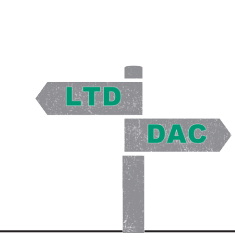
The Companies Act 2014 came into operation on 1st June 2015. From this date there is an eighteen month transition period during which Existing Private Limited Companies (EPCs) will have to make a decision on which of the new entity types they wish to become.
In this update on the Companies Act 2014 (the “Act”) we discuss the topical issue of loans/advances between a company and its directors.