Short-Term Relief for Households, Long-Term Competitiveness Questions Remain
Budget 2027 delivers tax relief and business measures but leaves key competitiveness issues unresolved.
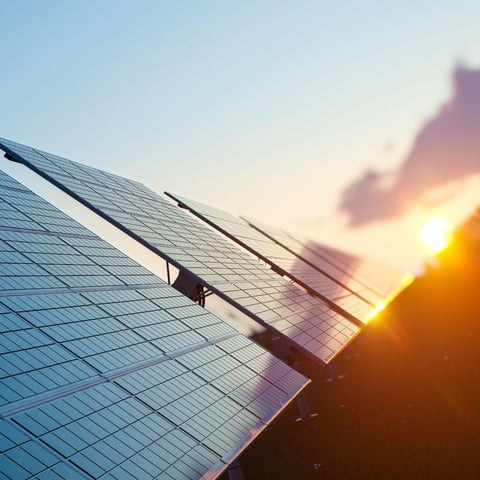
Ireland has already used VAT to support investment in solar panels and heat pumps. Budget 2027 is an opportunity to ask whether that approach should go further.
The focus should not be limited to penalising environmentally harmful behaviour, but also using targeted VAT measures to reduce the cost of sustainable choices and improve the commercial case for investment in greener technologies and business models.
The Government has demonstrated that VAT can support broader environmental objectives while remaining relatively simple to administer, such as the zero rate of VAT for the supply and installation of solar panels for private dwellings and reduced VAT treatment for qualifying heat pump installations.
Ahead of Budget 2027, there is an opportunity to consider whether this approach should be extended further, particularly across energy and the built environment, the circular economy, and sustainable transport.
The clearest examples of environmentally focused VAT policy in Ireland are solar panels and heat pumps.
Since May 2023, Ireland has applied a zero VAT rate to the supply and installation of solar panels on private dwellings. The policy objective was to reduce installation costs and encourage greater investment in renewable energy generation. Data from the CSO, cited by the Department of
Climate, Energy and the Environment in August, shows that over 200,000 homes across Ireland have now installed solar panels.
Heat pumps have followed a similar path. Since January 2025, qualifying low-emission heat pump systems supplied and installed under a single contract have benefited from reduced VAT treatment to help reduce the upfront cost of investment.
There is also international precedent, such as in Germany where a zero VAT rate for qualifying photovoltaic systems and associated storage technologies has been in place since 2023. The policy explicitly extends beyond solar panels themselves and includes qualifying battery storage systems. France has taken a slightly different approach by applying reduced VAT rates to qualifying energy renovation works and energy-efficiency improvements in residential property.
If Budget 2027 is to build on the solar and heat pump measures, the most practical next step would be to target technologies that reduce household energy demand or improve the return from domestic renewable generation. Options could include:
If Government wants faster adoption of specific technologies, reducing the VAT cost can improve the investment case.
The policy objective behind the circular economy is straightforward: keep products in use for longer and make repair a more attractive option than replacement. That means encouraging repair, refurbishment, reuse, remanufacturing and resale, rather than disposal and replacement.
While Ireland does not have a dedicated circular economy VAT regime, elements already exist within the current system. Certain repair services benefit from reduced VAT treatment, such as bicycle repairs.
Ireland also operates the second-hand goods margin scheme, which allows qualifying dealers to account for VAT only on the margin earned on the resale of second-hand goods rather than on the full selling price. The original purpose was to avoid double taxation, but it now plays an increasingly important role in supporting second-hand markets.
The public has already shown an appetite for circular approaches as platforms such as Vinted have helped normalise the resale and reuse of goods. While private individuals selling used goods online are not operating the margin scheme themselves, the growth of second-hand markets shows the potential for wider economic activity that these rules help facilitate.
Sweden provides a good internation example: the country’s VAT system applies a reduced rate to certain repair services including clothing, footwear, bicycles and household linen. The explicit policy objective is to encourage repair rather than replacement and to keep products in use for longer. For Ireland, practical options include:
For Budget 2027, the strongest case is for measures that are easy for consumers to understand and practical for businesses to apply. That points towards repair and refurbishment services where the environmental objective is clear and the VAT treatment could be administered without excessive complexity.
Compared with renewable energy, VAT has played a relatively limited role in supporting sustainable transport in Ireland. Beyond the reduced VAT treatment for bicycle repairs, there has been relatively little use of VAT incentives to encourage more sustainable transport choices.
Contrast this with Norway, where the Government has specifically identified taxation measures and incentives as one of the primary drivers behind the transition to more sustainable modes of transport.
For many years, electric vehicles benefited from significant VAT reliefs as part of a wider package of incentives designed to encourage adoption. These incentives formed one element of a broader strategy that has contributed to exceptionally high EV adoption rates. By the end of 2024, electric vehicles represented 88% of new passenger car sales in Norway, according to state figures.
EV incentives are not the only approach open to the Government. Recent EU VAT reforms specifically expanded Member State flexibility in relation to bicycles and electric bicycles. While this does not automatically mean Ireland should reduce VAT in these areas, it does mean policymakers now have greater flexibility to consider how VAT might support sustainable transport objectives.
For Ireland, the clearest opportunities are likely to be measures that support lower-cost, lower-emission transport choices, such as bicycles and e-bikes, rather than broad reliefs that would be expensive and harder to target.
Ireland has already demonstrated that VAT is not only a revenue-raising tool, but a lever to support environmental policy goals. Used carefully, it can reduce the cost of choices Government already wants households and businesses to make.
That should be part of the Budget 2027 discussion – one that goes beyond discouraging environmentally harmful behaviour and examines where VAT can do more to support the behaviours policymakers are already trying to encourage.
Ireland now has practical examples from across Europe to build on.
The priority should be to focus on measures that are targeted, administratively workable and capable of influencing real investment and consumer decisions.
Emma is a tax partner, leading our indirect tax practice. Emma has experience in a broad range of indirect taxes and specialises in VAT, advising both domestic and international clients on Irish and international VAT issues across a range of industries, including financial services, real estate, technology and fintech.


Budget 2027 delivers tax relief and business measures but leaves key competitiveness issues unresolved.






Budget 2027 offers tax relief but lacks ambition for enterprise growth.
Budget 2027 tax and financial impact on Irish individuals and families.
Subscribe to our Tax insights to get the latest Budget insights, analysis, and event updates direct to your inbox.

Get Budget 2027 insights, analysis and updates from our experts