In December 2021, the European Commission (EC) published its proposal for Anti-Tax Avoidance Directive III (ATAD III) which aims to discourage the misuse of shell companies within the EU.
This correspondence, deemed a Level 1 Compliance Intervention, offers all eligible taxpayers the opportunity to self-review their tax returns for Period 1 (which ended on 31 December 2021 or 30 April 2022 where extension applied) and make an unprompted qualifying disclosure by 31 January 2023 in relation to any additional tax liabilities identified.
A family partnership is a term used to describe a partnership between members of a family, often parents and their children. It can be a useful vehicle for holding investment and/or trading assets for the benefit of a number of family members.
Grant Thornton offers a timely, cost effective, managed iXBRL tagging service for company financial statements and tax returns. If the Irish Revenue or HRMC iXBRL tagging requirements apply to your company then our service could be the solution for you.
The Department of Public Expenditure and Reform have announced changes from 1 July 2019 to the standard rates of subsistence allowances in Ireland that apply to the Civil Service.
A restricted share scheme grants an employee “restricted” shares in their employer company. The shares are issued with restrictions requiring the shares to be retained on trust for the participant for a fixed period before they can be sold. The employee has beneficial ownership during this period. The fixed retention period is commonly called the ‘clog’ period.
As the holder of a VAT 56B Authorisation Certificate (VAT 56B), you will no doubt be aware that you are entitled to receive qualifying goods and services at the zero rate of VAT, regardless of the actual rate of VAT applicable to the good or service in question. This factsheet acts as a refresher to ensure that you are gaining the most from your VAT 56B, yet not availing of the zero rate of VAT where it would not be appropriate to do so.
Relief from Capital Gains Tax (CGT) is available for individual entrepreneurs disposing of certain business assets. Entrepreneur relief was originally introduced under Finance (No 2) Act 2013 however has since been revised by Finance Act 2015 with the aim of encouraging serial entrepreneurs to establish new businesses.
Under the Companies Act 2014 it is possible for an officer (being a director or secretary) of a company, to apply to be exempt from having their usual residential address appearing on the register, and available to the public for a nominal fee.
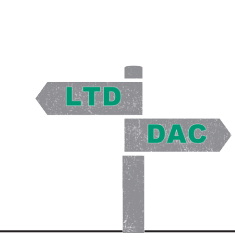
The Companies Act 2014 came into operation on 1st June 2015. From this date there is an eighteen month transition period during which Existing Private Limited Companies (EPCs) will have to make a decision on which of the new entity types they wish to become.
In this update on the Companies Act 2014 (the “Act”) we discuss the topical issue of loans/advances between a company and its directors.
Directors of NFPs and charities, by virtue of their function, carry a heavy burden of duties, obligations and responsibilities in the management of their organisations. The ever increasing influence of law and regulation in that process, some directly impacting on the manner in which they carry out their duties, makes it essential that they equip themselves with a clear knowledge of how it affects both them and the organisation they serve.