A company strike off is a process whereby a company is removed from the Register of Companies and ceases to exist. A company which has been struck off or dissolved can no longer trade, sell assets or make payments.
Company registers are official books kept by a company relating to legal and statutory matters. They are also referred to as statutory registers, combined registers or company books.
Shona O’Hea, our Global Head of Asset Management, talks about one of the challenges facing the Asset Management Industry at the moment being “The Quest for Talent”.
Listen to the latest from our experts in our Asset Management Matters podcast.
Guidelines on performance fees in UCITS and certain types of AIFs were published by ESMA on 5th November 2020 and will become applicable from 5th January 2021.
The Department of Public Expenditure and Reform have announced changes from 1 July 2019 to the standard rates of subsistence allowances in Ireland that apply to the Civil Service.
The asset management industry in Ireland is in good health. Despite global economic pressures, the sector continues to develop. Our asset management team has the skills and knowledge required to help you manage the challenges in the sector and develop your business.
In order to be a ‘qualifying company’ for the purposes of section 110 TCA 1997, a company must meet certain conditions, one of which is that it must notify Revenue of its status as a qualifying company.
Under the Companies Act 2014 it is possible for an officer (being a director or secretary) of a company, to apply to be exempt from having their usual residential address appearing on the register, and available to the public for a nominal fee.
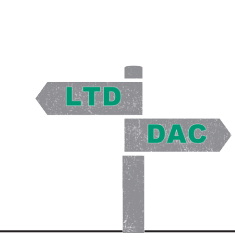
The Companies Act 2014 came into operation on 1st June 2015. From this date there is an eighteen month transition period during which Existing Private Limited Companies (EPCs) will have to make a decision on which of the new entity types they wish to become.
In this update on the Companies Act 2014 (the “Act”) we discuss the topical issue of loans/advances between a company and its directors.
The Companies Act 2014 (the “Act”) which consolidates all old legislation into 25 parts and over 1400 sections, was enacted on 23 December 2014 and commenced 1 June 2015. The CLG is a company most commonly used for charities, social clubs and property management.