Explore expert commentary and analysis on Ireland’s Budget 2026, covering tax updates, economic impact and key measures affecting individuals and businesses.
New Irish rules require gender balance on listed company boards by 2026, marking a major shift in corporate governance and diversity accountability.
Managing compliance across companies is time-consuming and often overlooked. Eliminating dormant companies reduces administrative and audit costs, freeing up finance directors.
Discover changes to company size criteria under new EU regulations. From July 2024, increased thresholds for 'micro,' 'small,' 'medium,' and 'large' companies take effect.
Our Partner Martin Shanahan recently sat down for a fireside chat with An Taoiseach Leo Varadkar to discuss a number of topics ranging from the Governments plans for the upcoming Budget, Ireland’s relationship with Foreign Direct Investment, how the Government hopes to support Entrepreneurs going forward, and the growth of the Economy.
The Companies (Corporate Enforcement Authority) Act 2021 contains a provision, which requires the directors of Irish companies to provide their Personal Public Service (PPS) numbers on certain documents submitted to the Companies Registration Office (CRO) in order to allow for verification of a director’s identify.
A company strike off is a process whereby a company is removed from the Register of Companies and ceases to exist. A company which has been struck off or dissolved can no longer trade, sell assets or make payments.
Company registers are official books kept by a company relating to legal and statutory matters. They are also referred to as statutory registers, combined registers or company books.
The Department of Public Expenditure and Reform have announced changes from 1 July 2019 to the standard rates of subsistence allowances in Ireland that apply to the Civil Service.
Under the Companies Act 2014 it is possible for an officer (being a director or secretary) of a company, to apply to be exempt from having their usual residential address appearing on the register, and available to the public for a nominal fee.
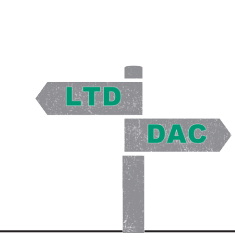
The Companies Act 2014 came into operation on 1st June 2015. From this date there is an eighteen month transition period during which Existing Private Limited Companies (EPCs) will have to make a decision on which of the new entity types they wish to become.
In this update on the Companies Act 2014 (the “Act”) we discuss the topical issue of loans/advances between a company and its directors.