Welcome to the first edition of our quarterly update on matters relating to financial advice and tax efficient financial planning.
Filter insights by:
Showing 12 of 160 content results
Relief from Capital Gains Tax (CGT) is available for individual entrepreneurs disposing of certain business assets. Entrepreneur relief was originally introduced under Finance (No 2) Act 2013 however has since been revised by Finance Act 2015 with the aim of encouraging serial entrepreneurs to establish new businesses.
Following the UK referendum on Brexit, many businesses have chosen and others will choose Ireland as an EU headquarters for doing business. Of course many commercial, legal and tax decisions will have to be made and the purpose of our guide is to provide a synopsis of the Irish VAT registration and filing requirements for businesses locating to Ireland.
Not-for-Profit (NFP) organisations may have VAT obligations, albeit that they may be considered tax exempt from a direct tax perspective. As a result, it is essential to manage and mitigate your VAT costs and possible exposures.
As part of the Base Erosion and Profit Shifting (BEPS) programme, Ireland has introduced domestic legislation to adopt the Country-by-Country (CbC) reporting requirements into Irish law.
In order to be a ‘qualifying company’ for the purposes of section 110 TCA 1997, a company must meet certain conditions, one of which is that it must notify Revenue of its status as a qualifying company.
Have you claimed FED for the last few years and saved up to €57,050 in income tax?
The speed of change and intensity of scrutiny have forced tax to the top of the boardroom agenda. So how can you get on top of this whirlwind of change?
Over the next few weeks we will be sharing our thoughts on ‘A Programme for a Partnership Government’. See all our tax thoughts here.
Under the Companies Act 2014 it is possible for an officer (being a director or secretary) of a company, to apply to be exempt from having their usual residential address appearing on the register, and available to the public for a nominal fee.
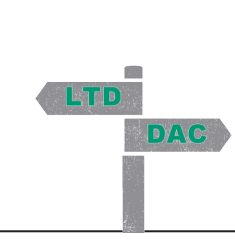
The Companies Act 2014 came into operation on 1st June 2015. From this date there is an eighteen month transition period during which Existing Private Limited Companies (EPCs) will have to make a decision on which of the new entity types they wish to become.